
WHY WE HOLD ONTO CLOTHES
AND WHEN IT'S TIME TO LET THEM GO
On clothing, memory, and the art of mindful curation.
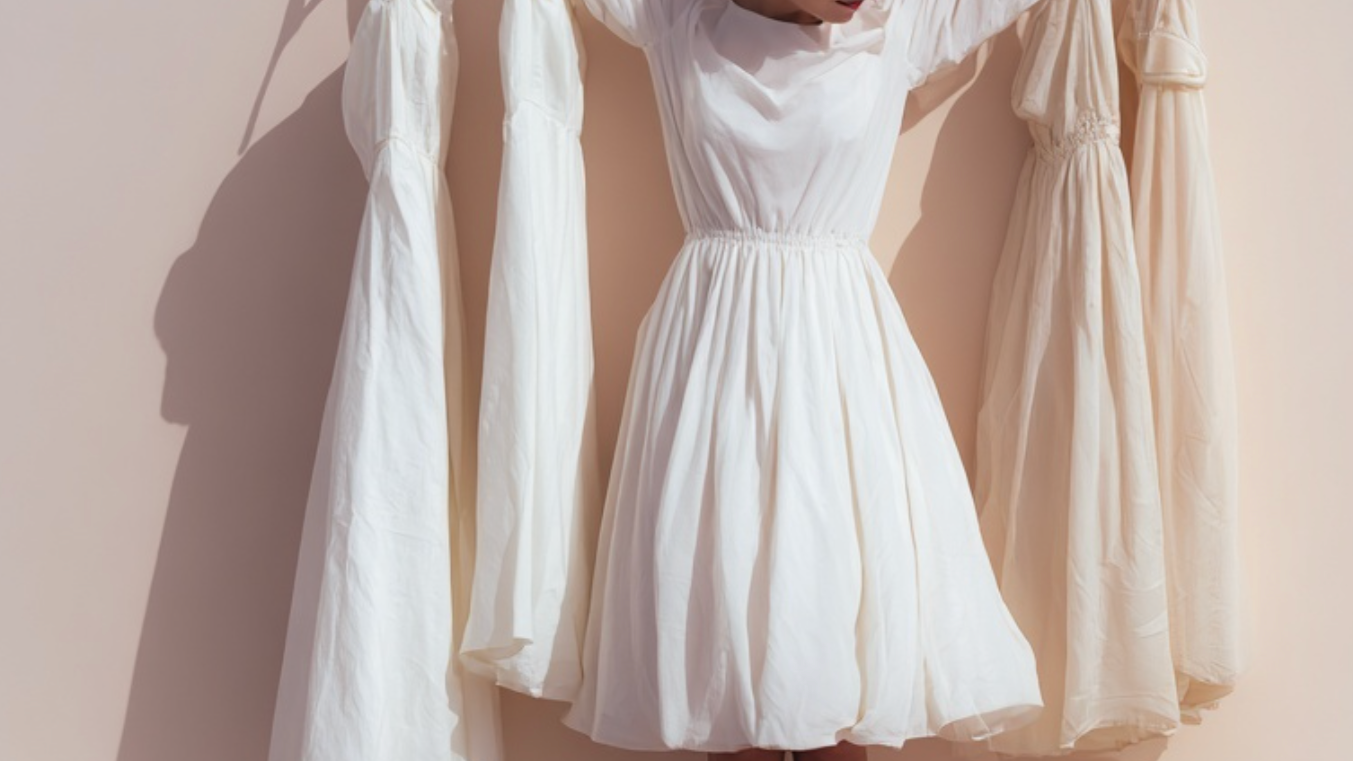
Multiple white dresses hang in the back of my closet, untouched for too long. Soft, beautifully made, thoughtfully curated by boutiques throughout the world. Every time I consider passing it on, I hesitate. Not because I don't love it. Because I do. But loving something and wearing it are different things. And I'm learning that being a mindful collector of beautiful clothing means knowing when to let pieces find their next life.
The Difficulty of Letting Go of Clothes
There's a reason letting go of clothing feels harder than releasing other possessions. Clothes are intimate. They touch our skin daily. They carry memories in their fibers, the dinner where someone complimented your silk blouse, the winter coat that kept you warm through a difficult season, the dress you wore when everything changed.
According to research on consumer behavior and attachment, we form stronger emotional bonds with clothing than almost any other category of possessions. This isn't weakness or materialism. It's human.
We remember who we were in these pieces. The confident version in the tailored blazer. The adventurous self in the vintage leather jacket. The hopeful person who believed she'd have everyday occasions for silk.
And if you love beautiful materials, real cashmere, Italian wool, Japanese denim, natural silk, the attachment deepens. Because these aren't just clothes. They're craftsmanship. Tradition. Quality that's increasingly rare.
“This isn't weakness or materialism. It's human.”
Why Quality Makes It Harder (And Better)
Here's what I've learned about collecting quality clothing: it complicates letting go, but it also makes it more meaningful.
When you invest in cashmere instead of acrylic, in silk instead of polyester, in leather that develops patina instead of plastic that cracks, you're not just buying clothes. You're participating in a different relationship with materials. One based on longevity, craftsmanship, and respect for what goes into making something beautiful.
This makes every piece harder to release. That cashmere sweater cost more than five fast-fashion equivalents. Someone raised those goats, processed that fiber, knitted that garment.
But here's the truth that took me years to accept: keeping something unworn doesn't honor it. Wearing honors it. And when you're done wearing it, passing it on honors it too. Quality clothing isn't meant to be archived. It's meant to be lived in.
The Weight of Unworn Potential
Your closet likely holds evidence of aspirational selves. I bought that cashmere dress when I traveled frequently for work, when my life had a rhythm that required beautiful, versatile pieces. That rhythm changed. My life changed. The dress is still beautiful, just not for the life I'm actually living.
What Your Closet Reveals
Take an honest inventory. Not of everything you own, but of what you actually wear.
Studies on clothing utilization show most people wear 20% of their wardrobe 80% of the time. The rest sits waiting, for the right occasion, the right body, the right version of ourselves to appear.
If you love quality materials like I do, your closet might be full of beautiful things you rarely touch. Not because they're not lovely, but because they don't fit your actual life. This realization isn't failure. It's information.
Maybe you kept the silk dresses but your life shifted to casual. Maybe you invested in office attire before realizing you prefer working from home. Maybe you collected vintage wool when you lived somewhere cold, and now you don't.
None of this means you made wrong choices. It means you evolved.
The Environmental Truth
Here's where loving quality becomes even more important: the fashion industry is responsible for 10% of global carbon emissions and is the second-largest consumer of water worldwide.
But quality natural fibers, organic cotton, linen, silk, wool, cashmere, have significantly lower environmental impact than synthetic alternatives. They're biodegradable. They last longer. They require less frequent replacement. The problem isn't that you bought quality. It's that quality pieces sitting unworn don't fulfill their purpose.
“And when we hold onto clothes from guilt, environmental or financial, we're not solving anything. We're just converting our closets into storage units for good intentions.”
A Different Approach: Mindful Curation
I'm shifting from collector to curator. And the difference matters.
Collectors accumulate. Curators select, care for, and thoughtfully circulate.
A curator asks:
Does this serve my life as it actually is?
Am I wearing this, or keeping it as artifact?
Would this bring someone else more joy than it's bringing me?
Does keeping this honor the piece, or is letting it go more respectful?
When you think of yourself as a curator of beautiful clothing rather than a keeper of all beautiful clothing, the calculus changes. That white dress deserves to be worn. If not by me, then by someone who will reach for it regularly, who will appreciate the softness, who needs exactly that shade of cream.
The Practice of Letting Go Mindfully
Here's how I approach it now:
First, I acknowledge what the piece represents. Not just "it's a dress" but "this represents my trip or a past desire."
Then I ask: Is this still true? Am I that person? Is that still my life?
If not, I honor what was. I don't diminish the past version of myself who bought this. She had good taste. She chose quality. She made a thoughtful decision for who she was then.
Finally, I release it for its next chapter. Not to a donation bin where it might languish, but thoughtfully, to a friend, a consignment shop, a platform where someone who loves quality will find it.
Where Quality Clothing Goes Next
If you love beautiful materials, you probably worry about this: where do these pieces go when you're done with them?
The good news: quality natural fiber clothing has significantly more options than fast fashion.
Consignment and resale platforms specifically for quality pieces
Friends who share your appreciation for materials
Tailors and alterations specialists who can transform pieces
Textile recycling programs that handle natural fibers responsibly
Rental and clothing libraries where pieces get continuous use
Quality clothing doesn't end up in landfills the way fast fashion does. It circulates. It gets worn, altered, repurposed, eventually composted. It completes its lifecycle with dignity.
Your cashmere sweater has a future beyond your closet. And that's not loss, it's fulfillment of purpose.
What I Keep, What I Release
I still love beautiful clothing. I still invest in quality natural materials. But I'm more intentional now.
I keep:
What I actually wear regularly
Pieces that fit my real life, not aspirational life
Items that work across seasons and contexts
Clothing that feels like me now
I release:
Beautiful pieces that belong to a past chapter
Quality items that deserve to be worn, just not by me
Clothes I'm keeping from guilt or "maybe someday"
Anything I'm holding onto for a self I'm no longer becoming
The result isn't a minimal closet, it's a meaningful one. Every piece earns its place not by cost or quality alone, but by actually serving my life.
The Gift of Space
Here's what I didn't expect: letting go creates space for appreciation.
When your closet isn't crowded with unworn aspirations, you can see what you actually have. You can appreciate the silk blouse you do wear, the cashmere you do reach for, the quality pieces that serve your real life. You can get dressed without guilt. Without the mental weight of all those unlived possibilities hanging there. And counterintuitively, you can acquire new pieces more thoughtfully. Because you're no longer buying for fantasy selves or filling gaps created by guilt. You're choosing for the person you actually are.
An Invitation
If you're holding onto beautiful clothing you don't wear, consider this permission. You can love quality materials and still let things go. You can appreciate craftsmanship and still acknowledge when something's chapter in your life is complete. You can be mindful about consumption without turning your closet into a museum of good intentions.
Moving Forward
Letting go of clothes we love is hard. Especially when they're beautiful, well-made, expensive, meaningful. But keeping them unworn is harder. Harder on us, carrying the weight of who we're not. Harder on the pieces, stored away from their purpose. Harder on the next person who could be loving them.
The most respectful thing we can do, for the clothes, for ourselves, for the craftspeople who made them, is let them live. Wear what serves you. Release what doesn't. Trust that you're curating something meaningful, not just accumulating something beautiful. Your closet can be a reflection of who you actually are, not a catalog of who you hoped to become.
Ashley Etling, Co-Founder of Gatheron
Gatheron exists to help thoughtful people let go thoughtfully, giving quality clothing the next chapter it deserves, connecting what you're releasing with people who will love it. Because clothes this beautiful shouldn't sit unused. They should be worn, appreciated, lived in.